
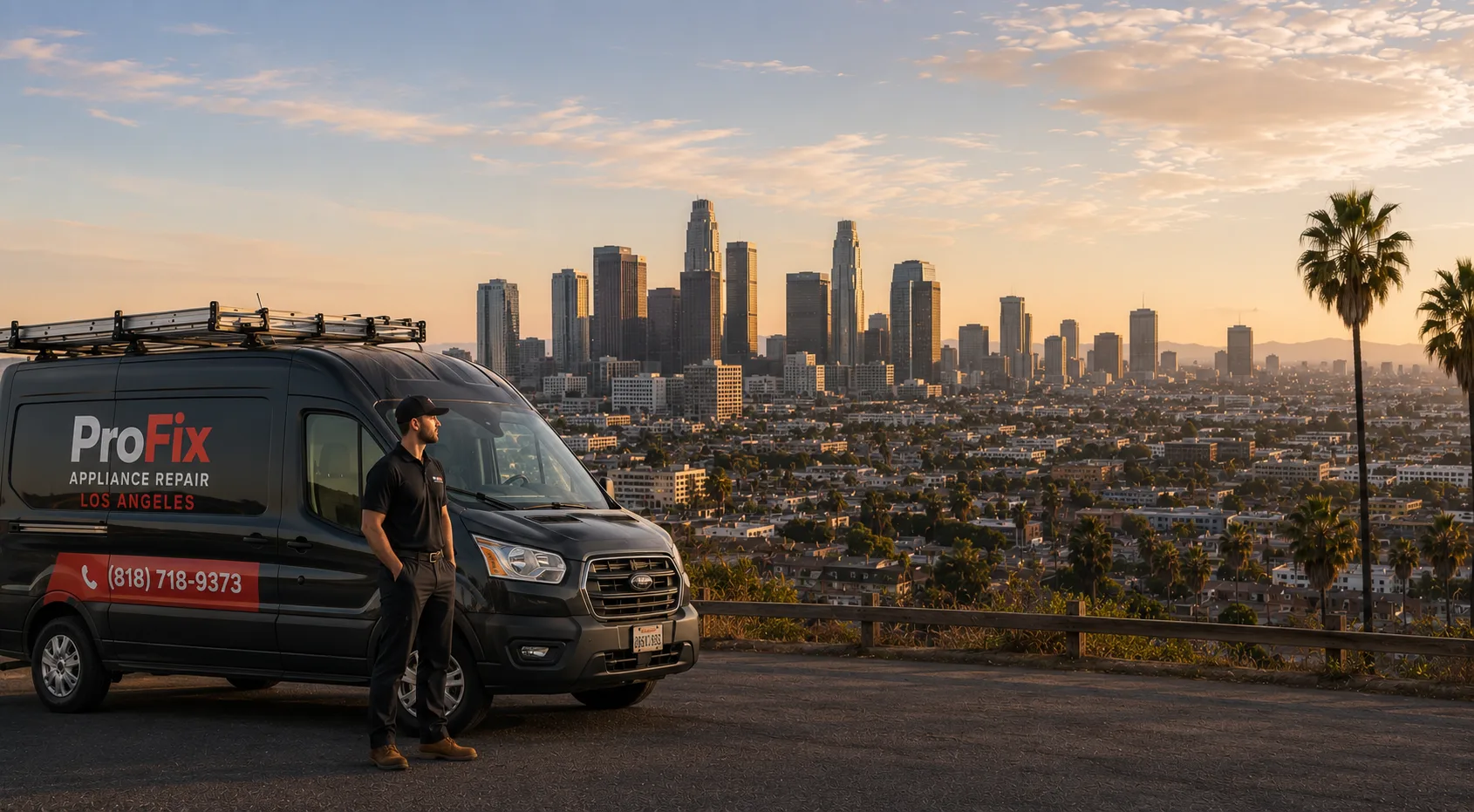

GE Certified — Southeast LA County
GE Repair Near Me in Southeast LA County, Los Angeles County, CA
Local GE appliance repair near you in Southeast LA County — certified neighborhood technicians, genuine OEM parts, same-day availability across Los Angeles County.
Mon–Sat 7am–8pm · Sun 9am–5pm
Schedule Your Repair
Service Type
What type of service do you need?
Or call us directly:
(818) 334-4526GE Appliances We Repair in Southeast LA County
GE Refrigerator
Repair in Southeast LA County →
GE Washer
Repair in Southeast LA County →
GE Dryer
Repair in Southeast LA County →
GE Dishwasher
Repair in Southeast LA County →
GE Oven / Range
Repair in Southeast LA County →
GE Microwave
Repair in Southeast LA County →
GE Freezer
Repair in Southeast LA County →
GE Cooktop
Repair in Southeast LA County →
GE Wine Cooler
Repair in Southeast LA County →
GE Stove
Repair in Southeast LA County →
GE Range
Repair in Southeast LA County →
Other Brands We Service in Southeast LA County















































Built for Los Angeles — Homes, Condos & More
ProFix Appliance Repair Los Angeles is Southeast LA County's trusted source for local GE appliance repair. Our neighborhood technicians are specifically trained on GE models and carry genuine OEM replacement parts, so most Southeast LA County GE repairs are diagnosed and fixed in a single visit — backed by a 90-day parts and 30-day labor warranty.
How It Works
Available Now · Los Angeles, CA
Ready to schedule your repair?
ProFix Appliance Repair Los Angeles — trusted by thousands of Los Angeles homeowners. Same-day slots available.
Over a Century of Iteration — and Legacy Parts to Match
GE has been building home appliances since 1907, and while today's GE Profile and GE Cafe lines use modern electronics, the underlying mechanical architecture — compressor placement, evaporator design, motor mounting — has been refined incrementally rather than reinvented every few years. That long iteration history is why GE parts availability is among the best in the industry; even appliances a decade or more old typically still have every major component in active production, which is genuinely rare among mainstream brands at this point.
The most common GE refrigerator call is ice maker malfunction, frequently traced to a failed water inlet valve rather than the ice maker unit itself — a cheaper, faster fix that many DIY attempts miss because they replace the ice maker assembly first without checking upstream water flow. Compressor issues rank second, and GE's older reciprocating compressors, while less efficient than newer inverter designs, tend to fail in a more predictable, diagnosable way that doesn't require the same guesswork as some newer electronically-controlled compressor systems.
GE dishwashers commonly need control board replacement after eight to ten years of service, and defrost system failures — heater, thermostat, or timer — are the top freezer and refrigerator combo unit complaint, usually showing up as excess frost buildup on the back wall of the fridge compartment that gradually restricts airflow until the unit can't maintain temperature properly anymore.
GE ranges and cooktops see a fairly even split between igniter failures on gas models and heating element issues on electric models, and on GE's smart-connected Profile ranges, we also field a steady stream of WiFi module connectivity complaints — usually a router or network issue rather than an actual appliance fault, though it's worth ruling the module out during diagnosis regardless.
GE Profile and Cafe: Where the Electronics Get More Involved
GE's premium Profile and Cafe sub-lines add WiFi connectivity, precision cooking modes, and more sophisticated control boards than the base GE line, which shifts some of the diagnostic work from mechanical inspection to electronic fault-code reading. These boards are more expensive to replace than base-line GE boards but are still meaningfully cheaper than comparable boards from Sub-Zero, Miele, or Thermador, keeping GE Profile repairs in a genuinely middle-tier cost bracket.
Advantium and combination microwave-oven units, common in GE Profile and Cafe kitchens, have their own failure quirks — particularly the halogen or speedcook heating elements, which are a wear item we replace fairly routinely on units used for daily cooking rather than just reheating leftovers occasionally.
GE Cafe's customizable hardware finishes and knobs are a cosmetic differentiator that doesn't really affect repair complexity, but we do keep a wider variety of matching hardware in stock for these models specifically since customers understandably want replacement parts that match their chosen finish rather than a mismatched substitute.
When Repair Beats Replacement on GE Appliances
GE's parts availability and moderate repair costs ($130–$420 typical) make it one of the more repair-friendly brands in our service area, particularly for refrigerators, where a compressor or sealed-system repair is almost always cheaper than the $1,200–$2,500 replacement cost of a comparable GE Profile model. We generally recommend repair up through the 12-to-15-year mark unless multiple systems are failing simultaneously, which is a genuine signal that the appliance as a whole is reaching end of life rather than experiencing an isolated fault.
Where replacement starts making more sense is on older base-tier GE dishwashers and microwaves nearing end-of-life pricing parity — when a repair approaches 50% of a new unit's cost, we say so plainly rather than defaulting to the repair just because parts are available and the fix itself is technically straightforward.
LA-Specific Wear Patterns
GE refrigerators in LA's warmer inland neighborhoods work harder to maintain internal temperature, and we see accelerated compressor wear in units placed in garages or unconditioned laundry rooms — a fairly common setup in older LA homes that have converted garages into secondary storage or overflow refrigeration space. GE units aren't rated for the temperature swings some garage installations see, which shortens compressor life regardless of how well the unit is otherwise maintained.
Hard water across much of LA County also affects GE ice makers and water inlet valves, and we typically recommend an inline filter on any GE refrigerator with a working ice maker to slow mineral buildup on the valve seat, which is the most common root cause behind repeat ice maker service calls on this brand across our entire LA County service area.
SmartHQ, Warranty Plans, and the Haier Ownership Transition
Replacing the water filter on GE refrigerators every six months, even on units where the filter indicator light hasn't triggered yet, meaningfully slows the mineral scale buildup responsible for most ice maker and water inlet valve failures we see across LA's harder-water neighborhoods. It's a five-minute task that regularly saves homeowners a $150-plus service call down the line.
GE dishwasher owners get the longest service life out of their units by running a monthly empty-cycle clean with a dishwasher-safe descaling product, particularly in LA's moderately hard water areas, since scale buildup on the heating element and spray arm nozzles is a slow, cumulative problem that's much easier to prevent than reverse once it's caused a full element failure.
For GE ranges and ovens, periodically checking that the oven door seal is intact and that vent openings on the back or top of the range aren't blocked by nearby cabinetry or stored items helps the convection and self-clean systems work as designed, preventing the uneven heating complaints that are otherwise easy to mistake for a failing temperature sensor when the real issue is just restricted airflow.
GE Monogram, the brand's ultra-premium built-in sub-line competing directly with Sub-Zero and Wolf, is a notable exception to GE's usual repair-friendly economics — Monogram units use more specialized componentry and command higher parts costs than base GE or even GE Profile, though still generally below full luxury-tier brands, and we service this line as its own distinct category rather than treating it like standard GE.
GE range and cooktop repairs, spanning both gas and electric configurations, show igniter and surface element failures as the top calls respectively, and because GE has manufactured cooking appliances for so long, replacement igniters and elements remain some of the easiest and cheapest parts to source across our entire brand lineup.
GE offers extended service plans on many of its appliances, and when we're called out to a GE unit still within that coverage window, we help customers understand what's covered before proceeding with an out-of-pocket repair, since duplicating work already covered under a service plan doesn't serve anyone's interest.
GE Profile and Cafe models purchased through certain retailers sometimes carry additional retailer-specific protection plans layered on top of GE's own warranty, and part of our initial diagnostic conversation includes asking about these overlapping coverage sources so customers don't end up paying for a repair that's actually already covered somewhere.
Once any warranty or service plan options are ruled out, we move forward with a standard out-of-pocket repair using the same GE OEM parts and diagnostic process regardless of coverage status, so the quality of the repair itself never depends on how the appliance is being paid for.
GE's SmartHQ app, used across WiFi-connected Profile and Cafe appliances, gives owners visibility into cycle status, error history, and in some cases remote diagnostics that we ask customers to share with us before a visit, since a stored fault code history can meaningfully narrow down the likely cause before a technician even opens the appliance cabinet.
Connectivity issues themselves are rarely the appliance's fault — most SmartHQ disconnection complaints trace back to home WiFi network changes, router replacements, or app updates rather than a hardware failure in the appliance's WiFi module, and we check the module itself only after ruling out the more common network-side causes first.
For GE appliances without smart connectivity, our diagnostic process relies on the same physical testing — voltage, resistance, pressure readings — that's always been standard for appliance repair, and we don't consider a lack of app connectivity data any real handicap given how thoroughly GE's mechanical systems are documented after more than a century of production.
We keep GE's SmartHQ troubleshooting guides on hand for our technicians specifically because connectivity complaints are common enough on newer Profile and Cafe models that having a quick, confident answer for customers — rather than defaulting to an unnecessary board replacement — saves everyone time and money on what's usually a simple network fix.
GE's major appliance division was sold to Haier in 2016, though the GE and GE Profile brand names, US manufacturing operations, and parts distribution network have continued largely uninterrupted since the transition, which means the deep parts availability and engineering continuity we've described throughout this page held up even through the ownership change.
We haven't seen a meaningful shift in parts quality or availability since the transition, and GE's Louisville, Kentucky manufacturing hub — a longtime center of the brand's appliance production — has continued operating, which reassures customers who occasionally ask whether the ownership change affects the reliability of a GE appliance purchased more recently.
For older GE units built well before the 2016 transition, parts sourcing remains just as strong as for current-generation models, consistent with GE's century-plus track record of maintaining legacy parts support regardless of corporate ownership changes along the way.
GE Repair Snapshot
GE's long manufacturing history means parts for units a decade or more old are still commonly in stock, keeping repair a viable option well past the age where other brands force replacement.
GE Appliance Repair in Southeast LA County — Common Questions
Can't find your answer? Book a service call or call us now.
Still have questions?
Our LA team is ready — same-day service across Los Angeles County.